Winter Construction in the Wasatch Back: How We Build Through Utah's Coldest Months
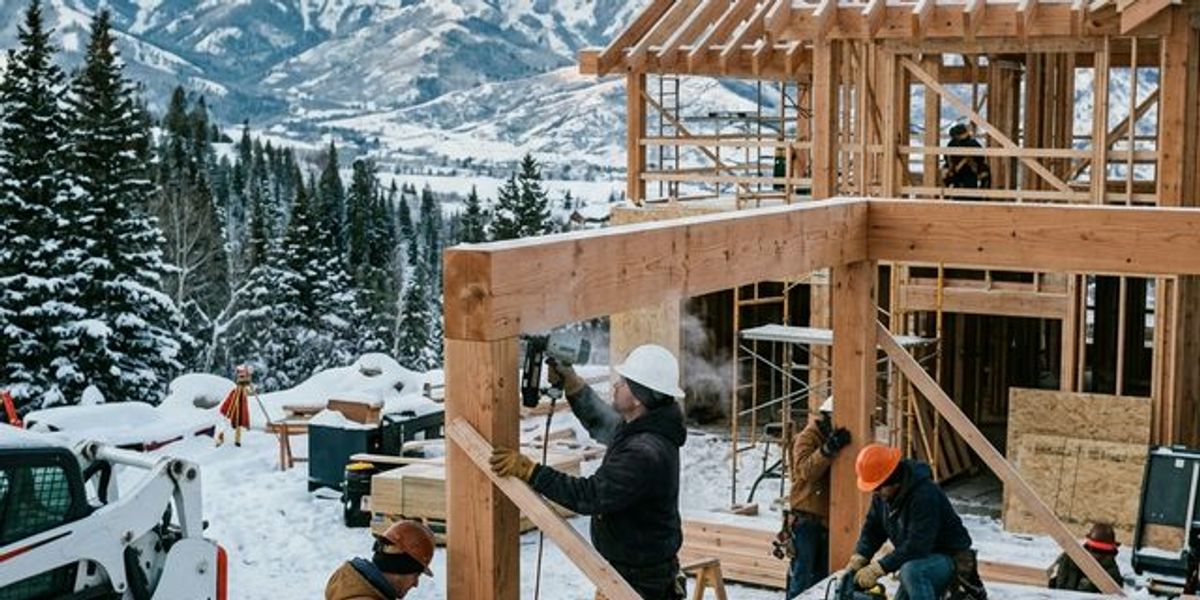
The Wasatch Back construction season has a reputation for being short — break ground in spring, close up before Thanksgiving. For builders who plan their projects around summer, that's true. But for builders who engineer their process for year-round construction, winter months are productive building months.
Roderick Builders constructs year-round in Park City, Benloch Ranch, Tuhaye, and every community where we work. We plan project timelines to align critical phases with optimal weather windows, but we don't pause for winter.
What Changes in Winter
Three things change when temperatures drop below freezing: concrete work requires heated enclosures, exterior work requires weather protection, and logistics require snow management. Each of these is solvable with proper planning.
Concrete pours in winter use heated enclosures — temporary structures that maintain above-freezing temperatures while the concrete sets and cures. The concrete mix itself is adjusted for cold weather: modified water ratios, accelerators, and sometimes heated water to keep the mix above minimum placement temperatures. This adds cost to winter pours, but it's standard practice for experienced mountain builders.
Exterior work — siding installation, roofing, window setting — can proceed through much of winter as long as temperatures are managed. Some adhesive-dependent installations (stone veneer, certain cladding systems) have minimum temperature requirements that may need temporary heating or scheduling around warmer days.
Site logistics in winter require daily snow management — clearing access roads, maintaining work areas, and protecting staged materials. For higher-elevation sites or communities with single-access roads, this becomes a significant planning consideration.
The Project Planning Advantage
The best approach to winter construction isn't brute force — it's sequencing. We plan projects so that weather-sensitive phases align with favorable conditions:
Foundation and concrete work is ideally scheduled for early fall or late spring, minimizing the need for heated enclosures. Framing can proceed through early winter — wood framing isn't temperature-sensitive. Systems rough-in (mechanical, electrical, plumbing) happens inside the enclosed structure, unaffected by weather. Interior finish work proceeds through the coldest months with the building heated and protected.
This sequencing means a project that breaks ground in late summer can be under roof before the heaviest snow, with interior work continuing productively all winter. By spring, the home is ready for final exterior work, landscaping, and completion.
What This Means for Your Timeline
Builders who don't construct through winter lose 3–5 months of productive time. On a 14-18 month project, that can mean an entire additional season before you move in. Year-round construction capability is a timeline advantage that compounds — you start on schedule, stay on schedule, and complete on schedule.
We plan project timelines to align critical external phases with optimal weather, while keeping interior progress moving through winter. The result is a consistent, predictable schedule that honors the commitment we make to every client.
Frequently Asked Questions
Does Roderick Builders work through winter?
Yes. We construct year-round in all Wasatch Back communities. We plan project sequencing to align weather-sensitive phases with favorable conditions while maintaining productivity through the coldest months.
Can you pour concrete in winter in Park City?
Yes. Winter concrete pours use heated enclosures, adjusted mix designs, and controlled curing environments. This is standard practice for experienced mountain builders, though it adds some cost compared to warm-weather pours.
Does winter construction cost more?
Some winter-specific activities cost more — heated enclosures for concrete, snow management, and temporary weather protection. However, these costs are typically offset by the timeline advantage of not losing 3–5 months of productive construction.
How much time does winter construction save?
Builders who pause for winter lose 3–5 months. On a 14-18 month project, year-round construction can mean completing an entire season earlier. We factor weather into our project plans from the start.
What work can be done inside during winter?
Interior work — framing, mechanical/electrical/plumbing rough-in, drywall, painting, cabinetry, flooring, fixture installation — all proceeds normally in a heated, enclosed structure regardless of exterior conditions.